Shopify and WooCommerce are two of the most popular ways to sell online. Both can run a successful store. The right choice depends less on features and more on how much of the technical work you want to own. This guide compares them on the things that matter in day-to-day running.
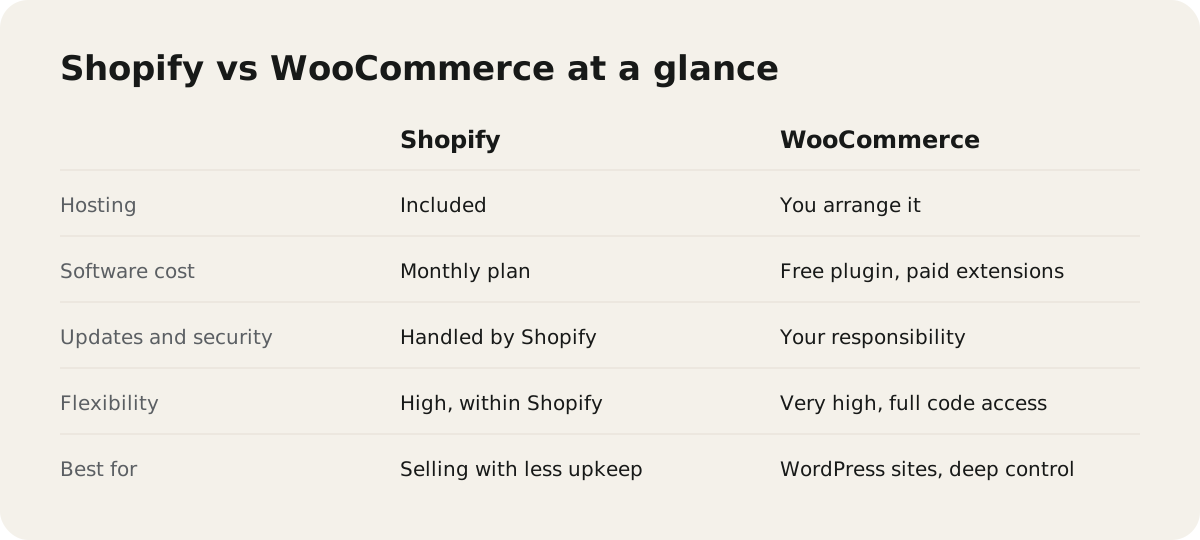
The basic difference
Shopify is a hosted platform. You pay a monthly plan and Shopify runs the servers, security, and checkout. You focus on products and customers.
WooCommerce is a free plugin that turns a WordPress website into a store. You choose and pay for hosting, and you (or your developer) look after updates, security, and backups.
Cost
Neither platform is "free" once you count everything.
- Shopify: a monthly plan (see Shopify's pricing page), payment fees, a theme, and paid apps. Our guide to Shopify store cost breaks this down.
- WooCommerce: the plugin is free, but you pay for hosting, a theme, paid extensions for features like subscriptions or advanced shipping, payment provider fees, and developer time for updates.
WooCommerce can cost less for a simple store run by someone technical. Shopify usually costs less in time, because there is less to maintain.
Ease of use
Shopify's admin is built only for selling. Adding products, managing orders, and setting up shipping are straightforward for non-technical teams.
WooCommerce uses the WordPress admin, which many people already know. It is very capable, but more plugins usually means more settings and more things that can conflict.
Flexibility and control
WooCommerce gives full access to the code and the database. Almost anything can be changed, which is powerful if you have a developer.
Shopify is flexible within its platform. Themes, apps, metafields, and APIs cover most needs. For very custom experiences, Shopify also supports headless storefronts. See theme customization or a custom storefront.
Security, speed and upkeep
On Shopify, hosting, security patches, and checkout compliance are handled for you.
On WooCommerce, they are your responsibility. With good hosting and regular updates it can be fast and secure. Without them, a store can slow down or become vulnerable over time.
SEO
Both platforms can rank well. What matters most is the work you put in: clear product pages, good category structure, fast loading, and helpful content.
WordPress has a long history as a content platform, which some teams prefer if blogging is a big part of their marketing. Shopify includes a blog and handles the technical basics, and SEO apps add more control.
Which should you choose?
| Choose Shopify if… | Choose WooCommerce if… |
|---|---|
| You want to focus on selling, not servers | You already run a WordPress site you want to keep |
| Your team isn't technical | You have a developer and want full code control |
| You expect to grow and want less upkeep | You need very unusual store logic |
| You want a reliable checkout without extra setup | You're comfortable managing hosting and updates |
For most businesses that want to sell without managing technology, Shopify is the simpler choice. WooCommerce is a strong option when WordPress is already central to your business.
Thinking about moving platforms? Read how to migrate to Shopify without losing SEO, or see our Shopify development service for help planning the switch. Once your store is live, read how to increase your Shopify conversion rate.